


Analog Drum Machine Buying guide
Analog Drum Machine: A Complete Buyer's Guide
A comprehensive guide to purchasing analog drum machines, covering sonic design, durability assessment, workflow philosophy, integration capabilities, and budget considerations.
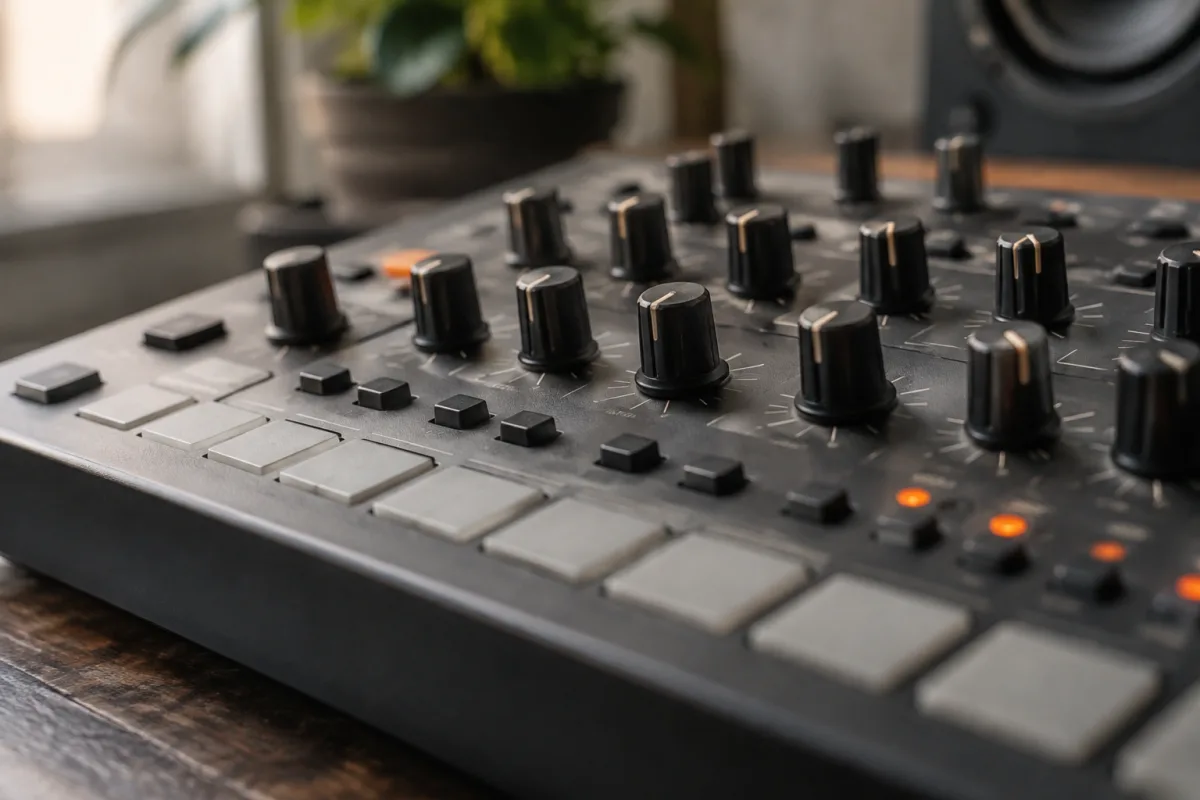
Purchasing an analog drum machine requires understanding sonic character, build quality, user interface philosophy, and budget parameters that distinguish exceptional instruments from mediocre alternatives. Unlike digital drum machines offering menu-driven sound creation, analog drum machines generate percussion through electronic synthesis, creating warm, characterful percussion ideally suited to electronic music, hip-hop, house, and techno production. This guide evaluates critical purchasing considerations, helping buyers select machines matching their specific production needs.
Understanding Analog Drum Machine Sonic Character
Analog drum machines generate percussion using analog circuitry—oscillators, envelope generators, filters, and amplifiers create electronic sound rather than reproducing acoustic drum recordings. This fundamental difference produces distinct sonic qualities: warm, round kick drums impossible to achieve through digital emulation; punchy, aggressive snares without sample recording; hats with organic, evolving texture. Producers often describe analog drum machines' sound as "warm," "alive," or "characterful" compared to digital alternatives.
Iconic machines like the TR-808 and TR-909 revolutionised electronic music partly through sonic character digital emulation struggles to replicate convincingly. Modern analog drum machines inherit this tradition, producing sounds that sit distinctively in mixes. If your production aesthetic emphasises organic, warm percussion, analog machines justify consideration despite higher costs than digital alternatives.
Evaluating Sound Engine Design and Sonic Range
Different analog drum machines employ different sound generation approaches, producing radically different sonic palettes. Subtractive synthesis machines (filters, envelopes, oscillators) offer maximum customisation but require understanding synthesis fundamentals. Physical modelling machines replicate acoustic drum behaviour electronically, producing more "natural" sounds through mathematical simulation. Hybrid approaches combine synthesis flexibility with preset usability.
Before purchasing, listen extensively to audio examples. Does the kick sound tight and punchy, or round and deep? Are snares crisp and responsive, or washy and indistinct? How do hats evolve musically? Does the overall percussion palette match your production style? Video demonstrations reveal sonic character more clearly than specifications.
Consider sonic range: some analog machines excel at tight, percussive electronic sounds; others specialise in warm, organic textures; some offer broad flexibility. Identify your primary production style (house, techno, industrial, ambient), then prioritise machines excelling at that aesthetic.
Build Quality and Durability Assessment
Analog drum machines are precision electronic instruments; build quality directly impacts longevity and reliability. Quality machines feature solid construction, sturdy knobs that resist wear, reliable power supplies, and connectors rated for frequent patching. Budget machines often employ cheaper components, plastic connectors prone to breaking, and unreliable power supplies causing intermittent failures.
Examine case construction: metal chassis outlast plastic housing; reinforced knob shafts resist breaking through intensive use. Check connector build: vintage machines with loose connectors indicate poor maintenance; new machines should feature gold-plated connectors resisting corrosion. Read user reviews focusing specifically on reliability and durability; brands with consistent reliability receive overwhelming praise.
Vintage analog machines require maintenance: power supplies may fail, components deteriorate, and repair costs escalate substantially. Modern analog machines employ updated components ensuring better reliability than vintage equivalents. Unless you're purchasing vintage specifically for sonic character or retro aesthetic, contemporary machines offer superior durability.
Interface Philosophy and User Workflow
Analog drum machines employ vastly different interface approaches. Some prioritise knob-per-function immediate access to sound parameters; others use menu diving through minimal controls. Direct-access machines (knobs dedicated to specific parameters) encourage experimentation and rapid sound design. Menu-driven interfaces require extensive navigation, reducing intuitive creativity but offering deeper parameters and presets.
Your workflow preferences matter significantly: if you enjoy hands-on, tactile sound design, prioritise machines with abundant dedicated knobs. If you prefer exploring preset variations and deep sound editing, menu-driven machines prove more flexible. Test interface philosophy through video demonstrations or hands-on store experience before purchasing.
Sequencer complexity varies enormously: some machines feature minimal pattern editing capability; others include sophisticated multi-pattern programming with advanced step sequencer features. Assess sequencer capability honestly: will you programme complex drum patterns, or primarily trigger pre-programmed patterns? Underestimate sequencer needs and you'll encounter frustration; overestimate and you'll waste money on unnecessary capabilities.
Synchronisation and Integration Capabilities
Modern production typically integrates hardware drum machines with DAWs and other equipment. Evaluate synchronisation options: do machines sync to external MIDI clock? Support USB MIDI control? Offer audio outputs with independent level control? Can you trigger sounds externally via MIDI notes? These capabilities determine integration smoothness with your existing setup.
Examine audio connectivity: do machines provide independent drum outputs (kick, snare, hats separately) enabling flexible mixing? Some machines force all audio to stereo mix output, limiting mixing flexibility. Professional machines often feature submix outputs—grouping related drums together for mixing convenience.
Consider whether you need individual outputs: bedroom producers often work with stereo mix output; professional studios benefit from independent channels. Clarify your requirements before purchase; upgrading connectivity later typically proves impossible.
Price Segments and Value Assessment
Analog drum machines occupy distinct price ranges. Budget machines (£300-700) deliver acceptable percussion suitable for hobbyists and bedroom producers. Build quality proves respectable; sonic character distinguishes them from digital machines but may lack refinement of premium options. These machines work for learning and casual use.
Mid-range machines (£800-1500) offer substantially improved sonic quality, better build construction, and more sophisticated sequencing. This price segment represents optimal value for serious producers: genuine analog sound character, reliable construction, and feature sets addressing most production requirements. Established brands like Elektron, Teenage Engineering, and Korg concentrate excellent machines in this range.
Premium machines (£1500-4000+) deliver exceptional sonic quality and build standards; many incorporate innovations unavailable at lower price points. These machines often justify investment for professional producers or specialists; hobbyists typically find mid-range machines adequate.
New versus Vintage Considerations
Vintage analog machines (TR-808, TR-909, TR-727) command premium prices despite age due to legendary sonic character and cultural significance. However, maintenance costs may exceed value; repair specialists charge premium rates; component replacement sometimes proves impossible. Vintage machines require understanding quirks and potential failures.
Modern reproductions (Behringer TR-808, Elektron Analog Four) capture vintage sonic characteristics through circuit-accurate emulation whilst offering modern reliability, new component warranties, and firmware upgrades. These alternatives cost 30-60% less than genuine vintage machines, delivering remarkably similar sounds with superior durability.
Unless vintage character specifically demands purchasing original hardware, contemporary machines offer superior value. Sonic differences between modern analog machines and authentic vintage often prove subtle in final mixes.
Expansion and Upgrade Potential
Some analog drum machines enable expansion through additional sound modules or sequencer upgrades. Before purchasing, clarify whether you anticipate future expansion desires, then verify whether your target machine supports them. Machines with limited expansion potential may restrict creative evolution if your production style develops.
Conversely, future-proofing against hypothetical expansion needs wastes money. Prioritise present capabilities and sound satisfaction; upgrade decisions evolve naturally through experience rather than speculative planning.
Community Support and Resource Availability
Machines with active user communities benefit from extensive resources: tutorial videos, firmware updates, sound packs, and user support forums. Popular machines like Elektron Analog Rytm enjoy thriving communities providing rapid problem-solving and creative inspiration. Obscure machines may suffer from limited support, making learning and troubleshooting difficult.
Research community activity before purchase: do YouTube tutorials exist? Do forums address common questions? Is the user base actively sharing sounds and workflows? Community strength doesn't dominate purchasing decisions but provides valuable secondary consideration.
For comprehensive information about analog drum machine technology, sound design principles, and production applications, review our complete guide to analog drum machines, covering sonic character variations, synthesis principles, and workflow integration strategies.
Making Your Purchasing Decision
When selecting an analog drum machine, prioritise sonic character matching your production aesthetic—listen extensively to audio samples. Evaluate build quality and reliability through review research and hands-on examination. Match interface philosophy to your workflow preferences: hands-on knob access versus menu-driven flexibility. Clarify synchronisation and connectivity requirements with your existing setup. Budget appropriately: mid-range machines deliver excellent value for serious producers; premium machines suit specialists or professionals. Consider community support and resource availability. Remember that excellent electronic music production depends on creative use of any capable machine, not merely purchasing the most expensive option. A well-chosen mid-range analog drum machine enables satisfying creative work for years to come.



Comments