


Stand Trombone Buying guide
Stand Trombone: A Complete Buyer's Guide
Choose the right stand trombone with confidence. Understand bore sizes, evaluate slide action, identify quality construction, and avoid overpaying.
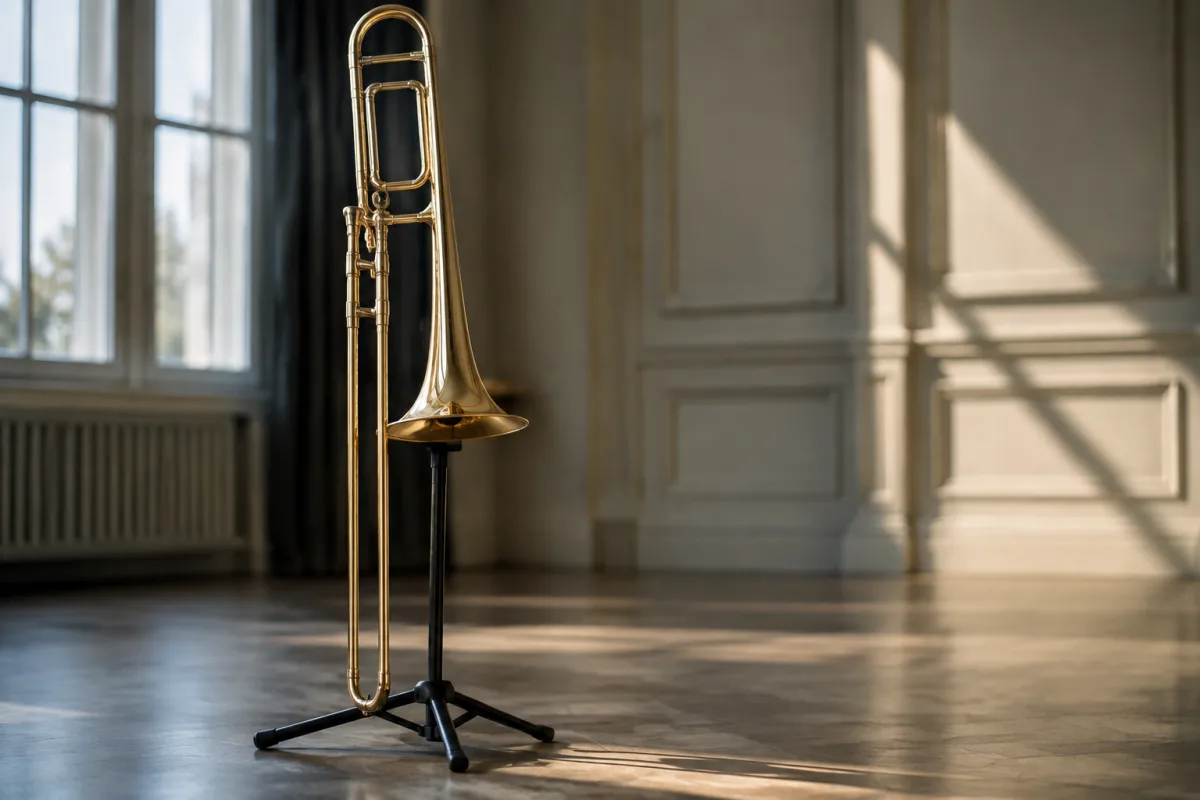
Buying a stand trombone requires careful evaluation of construction quality, bore dimensions, slide action, bell design, and price relative to your playing level and purpose. Whether you're upgrading from a beginner model, investing in an orchestral instrument, or seeking a specialist utility trombone, understanding what distinguishes a sound purchase from an overpriced option prevents costly mistakes. This buying guide focuses on practical evaluation criteria, helping you identify quality instruments and navigate pricing strategically.
Bore Size and Its Impact on Playability
Stand trombone bore dimensions fundamentally affect tone production, ease of playing, and suitability for different musical styles. Bore size typically ranges from 0.547 inches (smaller, termed "closed wrap") to 0.562 inches or larger (larger, termed "open wrap"). Smaller bores produce brighter, more focused tones and require less air; they're popular for jazz and chamber music. Larger bores produce warmer, darker tones and are standard for orchestral and symphonic playing.
Beginner trombones often feature smaller bores (around 0.547") optimising for easier control and faster valve response. Professional orchestral instruments typically use bores of 0.562" or larger. When shopping, identify which bore size suits your intended application. Don't assume larger is better—a player comfortable with a smaller bore will struggle with a larger instrument, and vice versa.
Evaluating Slide Construction and Action
The slide represents the trombone's most frequently used component, making slide condition critical to both playability and longevity. Inspect outer slide tubes for dents, corrosion, or straightness issues. A bent outer slide severely compromises playability and costs £300-600 to repair professionally.
Test slide action by operating it smoothly through all seven positions. Smooth, consistent resistance is ideal. Sticky, jerky, or resistance-varying slides indicate:
- Corrosion: Salt deposits from sweat or environmental humidity create rough surfaces. Serious corrosion requires professional restoration.
- Dents or deformation: Dents in inner slide tubes cause sticking. Minor dents might be removable; severe deformation requires expensive replacement.
- Improper fit: Loose-fitting slides leak air; tight-fitting slides bind. Both problems affect playability.
- Worn stockings: The cotton material surrounding the inner tubes wears with use. Replacement stockings cost £100-200 but are routine maintenance.
Ask about slide history. Recently serviced slides with fresh stockings indicate proper maintenance. Unknown slide condition warrants negotiating a lower price or budgeting for slide servicing post-purchase (typically £150-300).
Bell Design and Wrap Configuration
Bell designs vary, affecting both tone and playability. Standard orchestral bells are single-wrap configurations with a traditional red-brass construction. Some professional instruments feature dual bells (a second smaller bell extending from the primary bell) for additional range and tonal flexibility. Dual-bore instruments exist but are specialised and costly.
The wrap style—closed wrap (smaller, more compact) or open wrap (larger, more extended)—affects intonation, projection, and comfort when handling. Orchestral trombones typically use closed-wrap bells, whilst jazz and chamber instruments may favour open-wrap designs.
When evaluating bells, inspect for dents (common on the back) or cracks (rare but severe). Small external dents don't affect function; internal dents near the bore significantly impact tone and responsiveness. Professional dent removal costs £100-200 per dent, depending on location and severity.
Material Composition and Construction Quality
Professional trombones feature yellow brass (approximately 70% copper, 30% zinc) slides and red brass (approximately 85% copper, 15% zinc) bells. Beginner instruments may use nickel-silver or other alloys reducing cost but sacrificing tonal warmth. The outer slide's material affects slide action smoothness and corrosion resistance.
Examine solder joints, particularly around the bell connection and valve assembly (if applicable). Shiny solder joints indicate professional work; dull joints suggest amateur repairs that may fail. Ask about any previous repairs or soldering work. Well-documented repair history demonstrates proper maintenance; mystery repairs raise reliability concerns.
Valve tuning slides (if the instrument includes a valve) should operate smoothly and seal properly. A leaking valve slide eliminates the tuning slide's function, requiring costly repair or replacement.
Pricing Across Experience Levels and Applications
Trombone pricing varies dramatically based on construction quality, materials, and intended application:
- Student/Beginner models: £400-£800. Adequate for learning, limited projection and tonal range.
- Intermediate professional models: £1,000-£1,800. Suitable for semi-professional gigging and serious students.
- Professional orchestral instruments: £2,000-£4,500. Premium materials, superior intonation, and projection.
- Specialist dual-bore or valve trombones: £2,500-£6,000+. Limited market; prices reflect specialised manufacturing.
- Vintage or handmade instruments: Highly variable (£1,000-£8,000+), depending on maker reputation and condition.
Don't overspend on features you won't use. A beginner paying £3,000 for an orchestral instrument is overinvesting; a serious orchestral musician paying £600 is underinvesting in an inadequate instrument. Match price tier to your actual playing level and application.
Common Purchasing Mistakes
Ignoring playing tests: Never purchase a trombone without playing it thoroughly. Test all seven slide positions, high and low registers, and chromatic passages. Audio differences between instruments are substantial; a quick test isn't sufficient.
Overlooking mouthpiece compatibility: Different mouthpieces significantly alter playability. Ask whether the included mouthpiece comes with the sale or whether it's a loaned demonstration piece. Budget £50-150 for a quality replacement mouthpiece if needed.
Neglecting case condition: A damaged case doesn't affect the instrument's sound but affects transportation safety. Cases cost £200-400 to replace; factor damage into your offer.
Confusing trombone types: Tenor trombones, bass trombones, and valve trombones are distinctly different instruments with different pricing and applications. Ensure you're comparing similar instrument types.
Underestimating repair costs: Serious slide damage, bell dents, or valve issues can cost hundreds to repair. Always factor potential repair costs into your maximum purchase price.
Where to Purchase and Evaluation Checklist
Purchase from established music retailers, reputable used-instrument dealers, or knowledgeable private sellers with verifiable history. Avoid unknown marketplace sellers without substantial feedback.
Before finalising any purchase, verify:
- Slide operates smoothly through all seven positions
- No major dents in slides or bell
- Bell seams are intact with no cracks
- Valves (if present) seal properly
- Intonation is consistent across registers
- Case is functional and usable
- Mouthpiece clarity and ownership are established
For a comprehensive overview of stand trombone options, specifications, and applications, review the complete guide to stand trombone, which explores design variations and technical characteristics in greater depth.
A thoughtful purchasing decision transforms your trombone investment into a reliable, satisfying instrument. By systematically evaluating bore size, slide condition, bell design, and pricing, you'll identify a stand trombone that meets your musical needs and provides genuine value.


Comments