


Slide Grease article
Slide Grease for Beginners: A Complete Guide
Slide grease maintains smooth operation in brass instruments. This beginner guide covers how to apply it properly, types to use, reapplication timing, and common concerns.
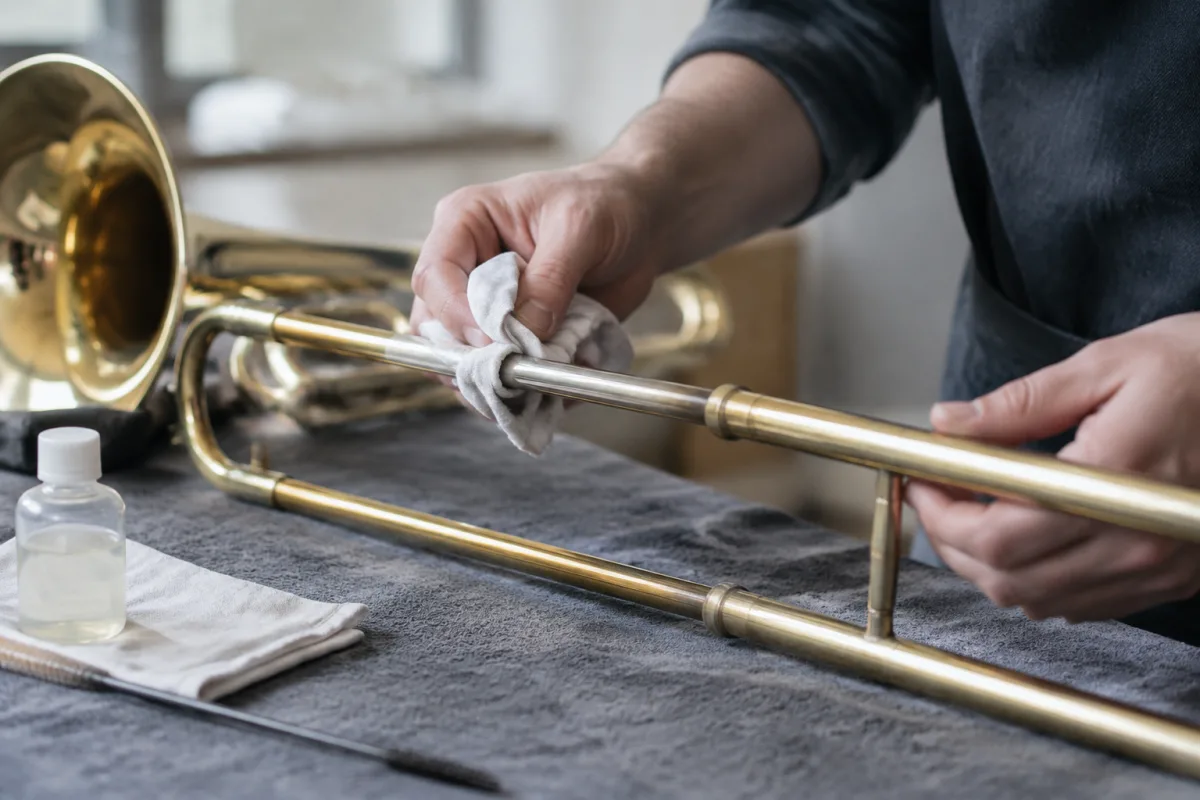
If you've just acquired your first brass instrument with a slide—whether trombone, valve trombone, or trumpet with a third-valve slide—you might feel uncertain about maintenance. Slide grease seems simple, yet many beginners worry they'll apply it incorrectly, damage the slide, or use the wrong type. This guide walks nervous new brass players through understanding slide grease, applying it properly, and troubleshooting common concerns confidently.
What Slide Grease Does: The Fundamental Purpose
Slide grease lubricates the brass tubing that moves in and out during playing. Without proper lubrication, the inner and outer slides stick together, making smooth movement impossible and risking denting or damage if you force the slide. Quality slide grease reduces friction, allows smooth gliding, and protects the brass finish from moisture and corrosion. Think of it as engine oil for your instrument—necessary for smooth operation and longevity. For beginners, this simple concept is genuinely all you need to understand initially.
Choosing the Right Slide Grease Type
Brass instrument slide grease comes in two main types: traditional cream greases and newer gel or synthetic formulations. Traditional greases (like most commercial brass maintenance products) are thicker, stay in place longer, and are preferred by many professional musicians. Gel formulations are newer, often easier to apply, and work well for beginners. Both work excellently; choose based on preference. Key beginner safety note: never use automotive grease, general lubricants, or kitchen oil. These damage brass finish or create sticky buildup. Always purchase grease specifically formulated for brass instruments; it's inexpensive (£3-8) and prevents expensive repairs. Read product labels to confirm suitability for brass slides.
Your First Application: Step-by-Step Confidence
Begin with a clean slide. If your slide is visibly dirty or has old, hardened grease, clean it first with a soft cloth and warm (not hot) water. Dry thoroughly with a soft cloth. Now apply slide grease: on cream greases, use your finger or a small brush to apply a thin layer along the inner slide and on the outer slide's contact areas. The key word is "thin"—more grease isn't better. A small dab (roughly the size of a pea) spread across the slide is sufficient. Never apply grease to the slide bore (the interior tubing where air travels); this can affect sound and mouthpiece feel. Apply only to the exterior surfaces where slides meet. Now work the slide in and out gently 5-10 times, distributing grease evenly. Wipe away excess grease with a clean cloth. Your slide should now move smoothly with minimal resistance. This entire process takes about two minutes.
Application Timing: When to Reapply
For beginner players, reapply slide grease every 2-4 weeks depending on usage. If you play 30 minutes daily, monthly maintenance is reasonable. If you practice several hours daily, reapply every 1-2 weeks. The best indicator is feel: when the slide starts feeling slightly stiff or dry, it's time to reapply. You'll quickly develop an intuitive sense for this timing. Initially, err on the side of more frequent applications; it's genuinely impossible to harm your instrument by lubricating regularly.
Common Beginner Concerns: Addressing Worries
Many beginners worry they'll damage the slide by applying grease incorrectly. Relax; brass slides are robust. Minor application mistakes won't harm anything. The worst that happens is the slide becomes slightly stickier, requiring extra wiping to remove excess grease. Some players worry about using too much grease. Excess grease simply requires wiping away; it won't damage the instrument. Others fear grease will run into the mouthpiece or affect sound. This only happens if you apply grease to the bore (the interior air passage), which you won't do—you're applying to exterior surfaces only. A few beginners worry about choosing between types of grease. Both cream and gel formulations work equally well; experiment with whichever your music shop recommends and switch types later if preference develops.
Maintenance Beyond Basic Lubrication
Slide grease is half of slide maintenance. The other half is keeping the slide clean. After playing, wipe your slide gently with a soft cloth to remove moisture and old grease. Weekly, run a soft cloth through the slide bore to prevent moisture buildup inside. Monthly, give the slide a more thorough clean with warm water and a soft cloth, then dry completely before reapplying grease. This simple routine prevents corrosion and keeps your slide functioning smoothly for years.
Storage and Protection: Long-Term Care
When not playing, store your instrument carefully. Avoid extreme temperature swings, which can cause condensation inside the slide. Never leave grease-covered slides exposed to dust or dirt; store instruments in cases to protect them. If you'll be away from your instrument for weeks or months, apply a fresh layer of slide grease before storage—it protects the brass during dormant periods.
Troubleshooting Slide Problems
If your slide suddenly becomes very stiff despite fresh grease, the inner and outer slides might be slightly misaligned. Gentle, patient work with the slide can sometimes restore smooth action. If stiffness persists or worsens, professional brass repair (£30-50 for basic evaluation) is wise. Never force a stuck slide forcefully; this risks permanent denting. A stuck slide isn't usually grease-related; it often indicates internal corrosion or damage requiring professional attention. If your slide squeaks audibly whilst playing, experiment with slightly less grease—squeaking sometimes indicates excess lubrication. If the slide remains squeaky after adjustment, professional evaluation is recommended.
Different Instruments, Slightly Different Approaches
Trombone slides require slightly more grease than trumpet third-valve slides because they move much further and more frequently. Valve trombone slides fall between standard trombone and trumpet in maintenance needs. Regardless, the basic principle remains: apply thin layers to exterior contact surfaces, avoid the bore, and reapply regularly. Your instrument's manual provides specific guidance if you're uncertain about exact application points.
Building Confidence Through Regular Maintenance
After maintaining your slide for two months with regular reapplication and cleaning, you'll develop genuine confidence. You'll intuitively recognise when slides need maintenance, apply grease smoothly without second-guessing yourself, and understand how properly-maintained slides contribute to your playing experience. This routine maintenance is part of being a responsible musician, and it's remarkably simple once you've done it a few times.
Slide grease maintenance is one of the simplest, most rewarding aspects of brass instrument care. By applying thin layers, reapplying every 2-4 weeks, and keeping slides clean, you ensure smooth operation and protect your investment. For deeper exploration of brass instrument maintenance, cleaning techniques, and troubleshooting more complex issues, see our comprehensive guide to slide maintenance. Most importantly, remember that slide grease is inexpensive insurance against expensive repairs—apply it regularly and let your instrument reward you with smooth, responsive playing for years.


Comments