


Jupiter Trumpet article
Jupiter Trumpet for Beginners: A Complete Guide
A welcoming guide to starting trumpet on a Jupiter instrument — setup, first sounds and the fundamentals that matter most.
Starting Trumpet on a Jupiter Trumpet: A Beginner's Guide
Your first Jupiter trumpet sits in its case like a golden puzzle. It looks intricate, expensive, and slightly intimidating. The reality is gentler than it appears. A Jupiter trumpet is built to be student-friendly, and you'll be making real sounds within your first lesson. This guide walks you through getting started without worry.
What You're Looking At
A Jupiter trumpet has three main parts: the bell (the flared end), the tuning slide (middle), and the valve section. The three valves are your fingers' home, and pressing them in different combinations changes the pitch. It looks complex because there's a lot going on, but the basic operation is wonderfully simple.
Good news: your Jupiter trumpet comes assembled and ready to play. No complicated setup. Just unpack it, put it together (gently), and blow.
Assembly: Valve Order and Slide Grease
Your Jupiter trumpet needs a small amount of grease on the tuning slide. Use only the grease supplied with your trumpet (or equivalent valve grease from a music shop). Apply a tiny dab, slide the tuning slide in and out a few times, and you're set.
Your three valves slide up and down in their casings. If they stick or feel rough, add a drop of valve oil (different from slide grease) and move them in and out gently. Never force anything. A Jupiter trumpet is precision-built; rough operation usually means something needs lubrication, not force.
The Mouthpiece and Embouchure
The mouthpiece is where the magic happens. Screw it firmly but gently into the leadpipe (the small tube at the front). Your Jupiter trumpet's mouthpiece is fairly large; this is normal for brass instruments and it takes a moment to get used to.
Your embouchure (the way you form your mouth and lips) is crucial. Place your lips together, then blow gently so they vibrate like a motorboat sound. This vibration is what makes the trumpet sing. Position the mouthpiece roughly in the middle of your lips, and you're ready to start.
First Sounds on Your Jupiter Trumpet
Buzz your lips (that motorboat sound) into the Jupiter trumpet without using the valves. You should get a low, floppy sound. Congratulations — you're making sound on your trumpet.
Now press all three valves down together and buzz again. The pitch should rise. Release the valves. The pitch falls. That's the basics of playing a Jupiter trumpet, and everything else is refinement.
Hand Position and Posture
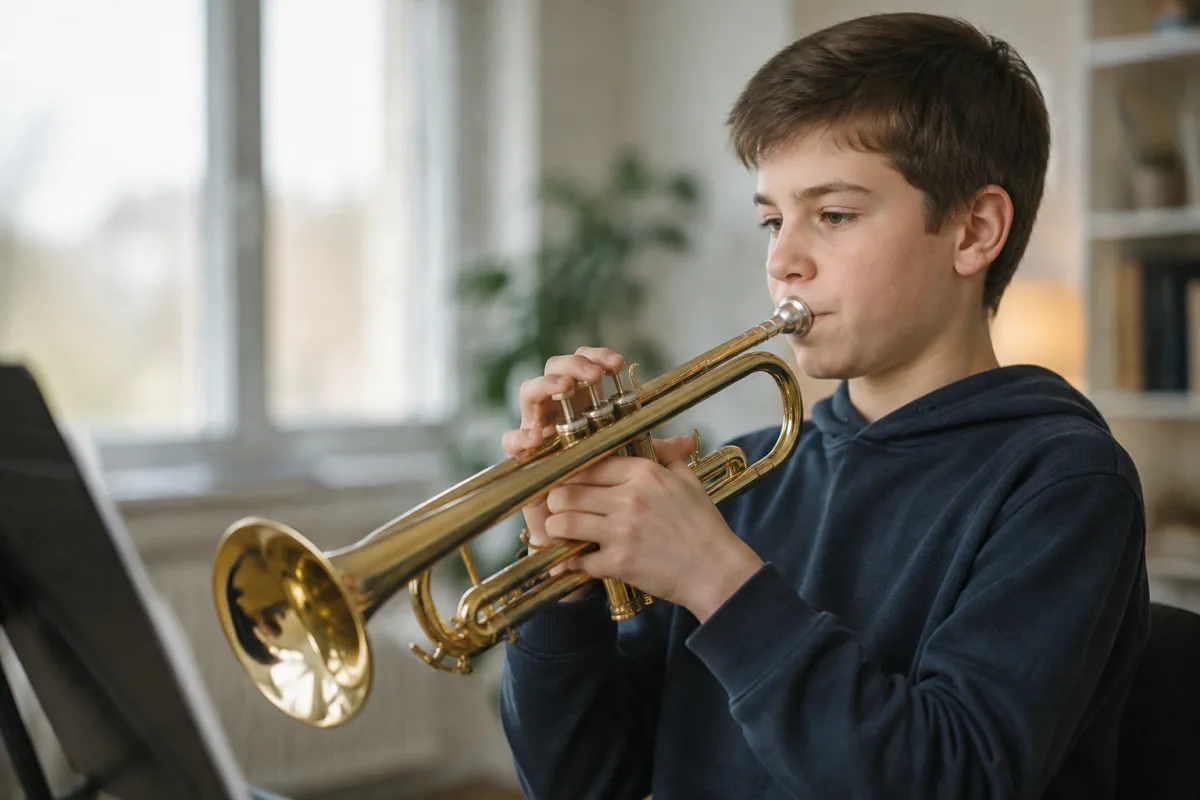
Hold your Jupiter trumpet up with your right hand, bracing it against your body and right hip. Your left hand rests on your lap or thigh. This feels odd at first, but it's standard and it works.
Your posture matters. Sit up straight, relax your shoulders, and avoid hunching. A Jupiter trumpet weighs about 1.5 kg, so it's not heavy, but bad posture tires your arms and neck. Good posture from day one prevents pain and builds endurance.
The Valve System: Fingers and Combinations
Your Jupiter trumpet has three valves, usually numbered 1 (left index finger), 2 (left middle finger), and 3 (left ring finger). Combinations of these valves create different notes. Your teacher or a method book will show you fingerings.
Here's the fun part: pressing different valve combinations changes the pitch. No valves = one note (called "open"). Valve 2 = lower note. Valves 1 and 3 = even lower. Within a few weeks, your fingers learn the patterns automatically, and you're not thinking about which valve to press.
Common First-Week Mistakes
Don't press the valves hard. A gentle, smooth press is all that's needed. Hard pressing doesn't change the sound and it strains your fingers and wears the Jupiter trumpet's internal parts faster.
Don't blow too hard. Many beginners think force makes sound clearer or louder. In fact, gentle, controlled air with a good embouchure produces the best tone. Your Jupiter trumpet responds to technique, not effort.
Don't ignore cleaning. After every session, run water through the valves and tubes to wash away moisture and spit. A weekly deep clean (disassembling valves and tubes) keeps your Jupiter trumpet in perfect condition. This takes ten minutes and prevents corrosion.
Don't skip maintenance. Slide grease and valve oil aren't expensive. Proper lubrication means your Jupiter trumpet plays smoothly and lasts for years. Neglected instruments seize up and become expensive to repair.
Your First Weeks: What to Expect
Your first sounds on a Jupiter trumpet will be buzzy, cracked, and often out of tune. That's universal. Every trumpet player started here. Within a week of regular practice, your embouchure firms up and the sound clarifies. Within a month, you're making actual music.
Consistency beats intensity. Fifteen minutes daily on your Jupiter trumpet beats sporadic hour-long sessions. Your lips develop stamina gradually, and overblowing early causes fatigue and pain.
Breathing and Air Management
Your Jupiter trumpet needs air — lots of it. Breathe from your diaphragm (deep, belly breathing) rather than shallow chest breathing. This gives you the air volume and control that brass instruments demand.
Most beginners don't breathe deeply enough. Try this: take a big breath (not gasping, just full), then play. You'll immediately notice more power and control. Breathing is half of learning trumpet.
Getting Help and Resources
A good trumpet teacher is invaluable. They'll establish proper embouchure, hand position, breathing and posture. A few lessons prevent bad habits that are hard to break later. After establishing basics, self-teaching with method books is viable.
Your Jupiter trumpet is a professional-grade student instrument used in schools worldwide. Any trumpet method book or online lesson designed for "student trumpet" will work perfectly with it.
For deeper exploration of Jupiter's trumpet range, materials and how to maintain your instrument, check our complete guide to Jupiter trumpets for beginners.



Comments