
French Horn Brass article
The Complete Guide to French Horn Brass
The French horn is one of the most distinctive brass instruments in the orchestra, renowned for its warm, mellow tone and remarkable versatility. Discover what makes it special and how to learn.
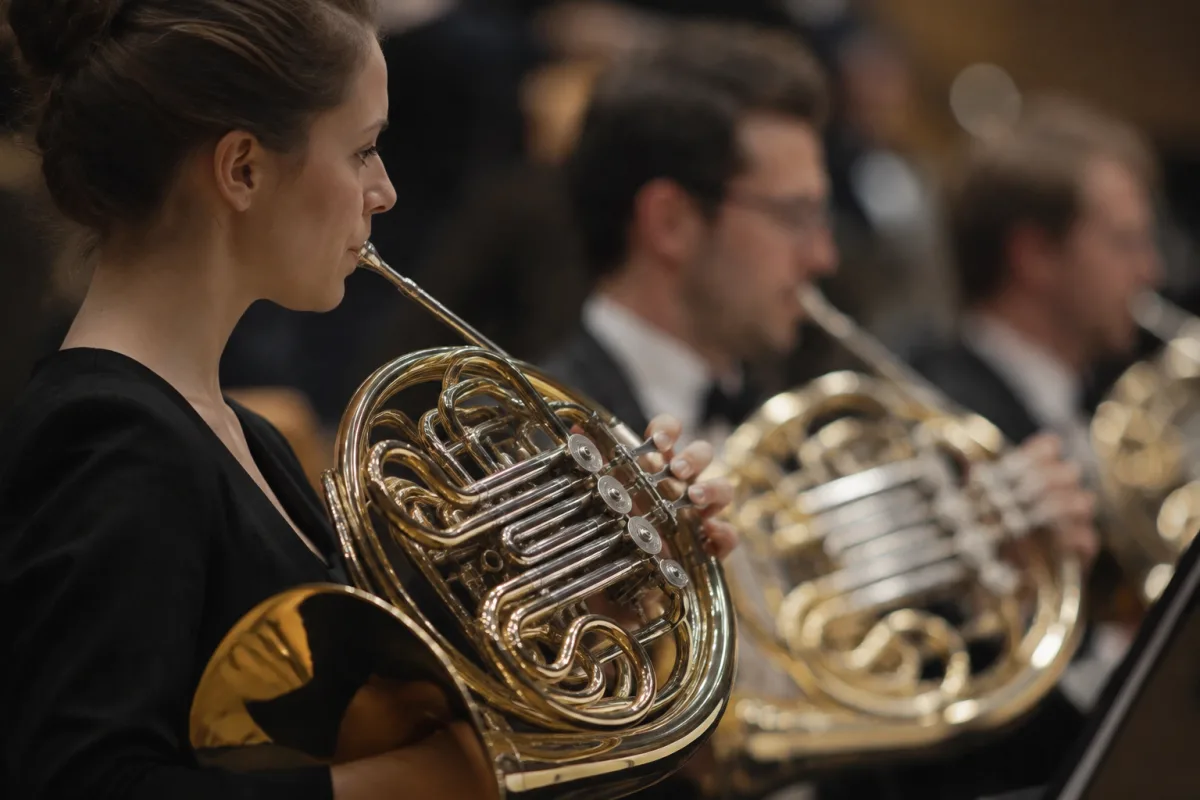
Understanding the French Horn: A Brass Instrument Masterclass
The French horn stands as one of the most distinctive and challenging brass instruments in the orchestra. With its warm, mellow tone and remarkable versatility, the French horn has captivated composers and audiences for centuries. Unlike other brass instruments that project boldly, a French horn produces a subtly nuanced sound that blends seamlessly within ensemble settings whilst shining brilliantly as a solo voice. Its unique characteristics make it both a treasured orchestral instrument and an increasingly popular choice for chamber and contemporary musicians.
A Brief History of the French Horn
The French horn evolved from the hunting horn used in European aristocratic circles during the Renaissance and Baroque periods. Hunters used simple horn instruments to signal during hunts, and these instruments gradually gained acceptance in orchestral settings during the 17th century. By the time of Mozart and Beethoven, the French horn had developed into a sophisticated orchestral instrument. The addition of valves in the 19th century dramatically expanded the instrument's range and ease of playing, transforming it from a limited tool to a fully chromatic instrument capable of performing any note in its register.
Construction and Design
A French horn consists of approximately 12 to 17 feet of tubing wound into its distinctive circular shape. The tubing diameter gradually tapers from the mouthpiece through the bell, which can measure up to 12 inches in diameter. Modern orchestral horns typically feature three, four or sometimes five piston valves, each of which lowers the pitch of the instrument when engaged. The combination of these valves allows the player to access the full chromatic scale across the instrument's comfortable playing range.
The horn's conical shape distinguishes it from other brass instruments. This cone gradually widens from the mouthpiece to the bell, creating the instrument's characteristic warm, blended tone. The bell traditionally points backwards and downwards, though some players angle it differently for comfort or acoustic preferences. Quality French horns are made from brass, sometimes with nickel or gold plating to enhance durability and aesthetic appeal.
Playing Technique and Sound Production
Producing sound on a French horn requires vibrating the lips against a relatively small, shallow mouthpiece. This demands considerable embouchure control and breath support. The player's right hand, inserted into the bell, plays a crucial role in pitch control and tone shaping. By moving the hand deeper into or further from the bell, players can bend notes, adjust tone colour and produce subtle dynamic variations. This hand technique, which has no direct parallel in other brass instruments, gives the French horn its expressive capabilities.
The instrument's natural sound emerges from the harmonic series, the sequence of overtones naturally present in any vibrating object. A skilled French horn player can access numerous pitches within each harmonic series by adjusting embouchure, breath pressure and hand position. This ability to manipulate these natural overtones represents one of the fundamental challenges and rewards of learning the instrument.
Range and Register
The French horn commands an impressive range spanning nearly four octaves from its lowest practical notes through to its highest reaches. However, most orchestral writing stays comfortably within a more moderate two to three-octave range. The instrument divides naturally into four distinct registers:
- Low register: Warm and mellow, ideal for lyrical passages and blending with tubas and trombones
- Middle register: The most commonly used and most resonant range, providing the instrument's characteristic richness
- High register: Bright and piercing when played loudly, yet capable of ethereal beauty in soft passages
- Extreme high register: Rarely used in standard orchestral writing but increasingly employed in contemporary and experimental music
The French Horn in the Orchestra
In symphonic contexts, French horns typically appear in groups of two, three, four or occasionally more. The horns provide harmonic foundation, lyrical countermelodies and powerful accents depending on the composer's intentions. Composers from Haydn to contemporary artists have written extensively for French horn, recognising its ability to blend seamlessly with strings whilst maintaining remarkable projection when needed. The instrument bridges the gap between the delicate colours of woodwinds and the powerful resonance of other brass.
Learning the French Horn
Learning French horn presents unique challenges compared to other instruments. The small, shallow mouthpiece requires significant embouchure development before producing clear tones. Beginners often struggle with intonation, as the hand technique in the bell dramatically affects pitch. However, students who persist through the initial learning phase discover an instrument of remarkable musical possibility and expression.
Most French horn students begin lessons on a single horn in F, the standard student instrument. As players develop proficiency, many progress to a double horn, which includes an additional set of tubing that shifts the instrument into B-flat for the high register. This doubles valve combination makes navigating the highest notes far easier and more reliable. Professional orchestral musicians typically play double horns exclusively, as the reduced intonation challenges and increased security justify the added complexity.
The French Horn Beyond the Orchestra
Whilst the French horn remains a staple of orchestral and chamber music, its presence in jazz, contemporary classical and experimental music continues expanding. Jazz musicians appreciate the instrument's warm tone and expressive capabilities. Contemporary composers write increasingly adventurous parts that exploit the horn's full range and unusual playing techniques. Folk and world music traditions from Europe to Asia incorporate horns in diverse musical contexts, demonstrating the instrument's universal appeal.
Choosing and Caring for a French Horn
Quality French horns represent significant investments, with student instruments beginning around £500 and professional models easily exceeding £5,000. Proper maintenance proves essential for longevity and consistent performance. Regular valve cleaning, careful storage and periodic professional servicing keep the instrument functioning optimally. Many horn players develop deep relationships with their instruments, as each horn possesses unique sonic characteristics that shape the player's musical voice.
Conclusion
The French horn remains one of the most rewarding yet challenging brass instruments to master. Its unique blend of technical complexity, sonic beauty and musical versatility continues attracting dedicated musicians worldwide. Whether played in grand orchestral settings, intimate chamber ensembles or cutting-edge contemporary contexts, the French horn's warm, expressive voice continues enriching the musical landscape. For any aspiring musician willing to embrace its challenges, the French horn offers a lifetime of musical discovery and satisfaction.



Comments