
Type of Trumpets article
The Complete Guide to Type Of Trumpets
The trumpet family offers remarkable variety beyond the standard Bb trumpet. Discover the different types of trumpets, their unique characteristics, and which suits your musical needs.
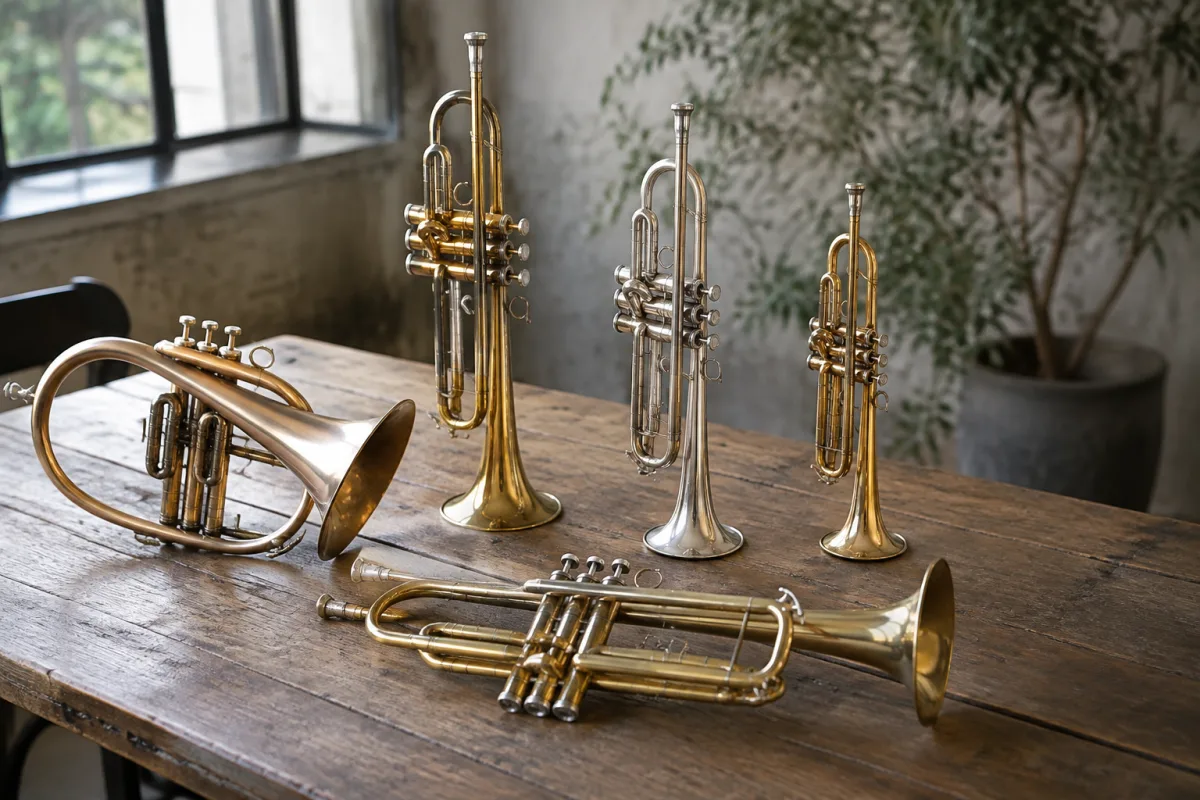
The trumpet family encompasses far more variety than most casual listeners realise. Whilst the standard Bb trumpet dominates popular music and classical orchestras, numerous specialised trumpet variants exist, each designed for specific musical contexts, performance environments, or tonal requirements. Understanding the different types of trumpets enriches your appreciation of the instrument's versatility and helps musicians select the optimal trumpet for their musical needs.
The Standard Bb Trumpet
The Bb trumpet represents the most common trumpet worldwide. Its three valves produce all chromatic notes within its range of roughly two and a half octaves above its lowest note. The warm, focused tone and responsive action make the Bb trumpet ideal for orchestral work, jazz, concert band, and popular music applications. Nearly every professional trumpet player owns at least one Bb instrument, making it the de facto standard for virtually all trumpet playing contexts.
Piccolo Trumpet
The piccolo trumpet sounds an octave higher than the Bb trumpet, producing brilliant, piercing tones suited for high-register virtuosic passages. Composers frequently employ piccolo trumpet for dramatic effect, demanding solos requiring extreme altitude without sacrificing musical expressiveness. The instrument's smaller bore and valves require adjusted embouchure technique and significantly more practice to master compared to standard trumpets. Professional orchestral musicians often carry a piccolo trumpet for specific repertoire passages, particularly Baroque concertos and contemporary classical works.
C Trumpet
The C trumpet sounds one major second higher than the Bb trumpet, pitched in C rather than Bb. This tuning provides advantages for orchestral musicians, particularly those reading many sharps or playing in high registers where the transposition becomes musically convenient. European orchestras favour C trumpets more than their American counterparts, reflecting different historical traditions and musical priorities. The C trumpet's slightly brighter tone compared to Bb instruments makes it particularly valued in symphony orchestras and classical music contexts.
D and Eb Trumpets
D and Eb trumpets sound progressively higher than Bb instruments, producing brilliant, clarion tones suited for specialised repertoire. These smaller instruments appear most frequently in orchestral contexts when composers require piercing high-register brilliance. Baroque trumpet concertos and heroic symphonic passages frequently employ D or Eb trumpets for their distinctive bright character. Modern players increasingly employ these higher-pitched instruments for authentic historical instrument performances, where original compositions were written with specific trumpet types in mind.
Bass Trumpet
The bass trumpet sounds lower than standard Bb, producing deeper, more mellow tones suitable for tenor register solos and orchestral bass lines. This larger instrument requires adjusted technique and breathing capacity compared to standard trumpets, yet remains relatively uncommon outside symphony orchestras and specialised chamber contexts. Composers from Wagner through contemporary classical musicians utilise bass trumpet for its unique tonal contribution to orchestral texture and colour.
Flugelhorn
Technically a conical-bored trumpet variant, the flugelhorn produces a mellower, warmer tone than the cylindrical-bored standard trumpet. The broader, more diffuse sound makes the flugelhorn particularly valued in jazz, pop, and contemporary classical music contexts where tonal warmth and smoothness matter more than projection. Famous flugelhorn players including Herbie Hancock and Clark Terry demonstrate the instrument's expressiveness and lyrical capabilities. Many jazz musicians carry flugelhorns alongside their primary trumpet for tonal variety.
Cornet
The cornet occupies an intermediate position between trumpet and flugelhorn, featuring a conical bore similar to flugelhorn but with more projection and brilliance. The cornet's warm, singing tone made it a standard instrument in 19th-century brass bands and continues its presence in contemporary brass band music, particularly in British and European traditions. Jazz pioneers including Harry James and Buddy Bolden achieved iconic sounds on cornets, establishing the instrument's legitimate place within jazz history.
Valve Trombone
Whilst technically a trombone rather than a trumpet, valve trombone shares sufficient similarity with trumpet family members to warrant inclusion. This instrument features valves rather than a slide for pitch control, producing a mellower tone between trumpet and trombone. Classical composers including Mozart and Hummel wrote valve trumpet concertos, though the instrument remains relatively specialised outside historical performance circles and brass band traditions.
Rotary Valve Trumpet
Common throughout Central Europe and particularly popular in German orchestras, rotary valve trumpets employ Perinet rotary valves rather than piston valves. The rotary mechanism produces a slightly rounder, warmer tone compared to piston valve instruments, whilst maintaining the same valve technique. European orchestra members frequently prefer rotary trumpets, reflecting regional musical traditions and aesthetic preferences developed over generations.
Historical Trumpet Types
Before valves were invented, natural trumpets required subtle embouchure and lip changes to produce different notes. Baroque trumpet concertos utilise this technique, demanding extraordinary facility and musicality from performers. Modern natural trumpet players pursuing authentic historical performance employ these period instruments, recreating the tonal and technical characteristics original composers intended. These instruments remain relatively specialised outside early music communities and historically-informed orchestral performances.
Selecting the Right Trumpet Type
Musicians should select trumpet types based on their primary musical contexts and aesthetic preferences. Jazz and popular musicians favour Bb and flugelhorn combinations. Classical orchestral players typically prioritise a quality Bb trumpet with a C trumpet for specific repertoire. Specialists in Baroque or early music pursue natural trumpets or period copies. Understanding your musical priorities allows informed instrument selection ensuring optimal results in your chosen genre.
The Bottom Line
The trumpet family's diversity reflects centuries of musical evolution and specialized requirements across different musical traditions. Whilst the Bb trumpet dominates modern playing, the piccolo, C, flugelhorn, and cornet each serve legitimate musical purposes, offering distinct tonal colours and artistic possibilities. Musicians pursuing trumpet mastery benefit from understanding these specialised instruments and recognising how different trumpet types contribute unique voices to orchestral, jazz, and classical contexts.


Comments