
Prices for Pianos article
The Complete Guide to Prices For Pianos
Piano prices range from £100 for budget keyboards to £150,000+ for concert grands. Learn what to expect at each price level and how to choose wisely.
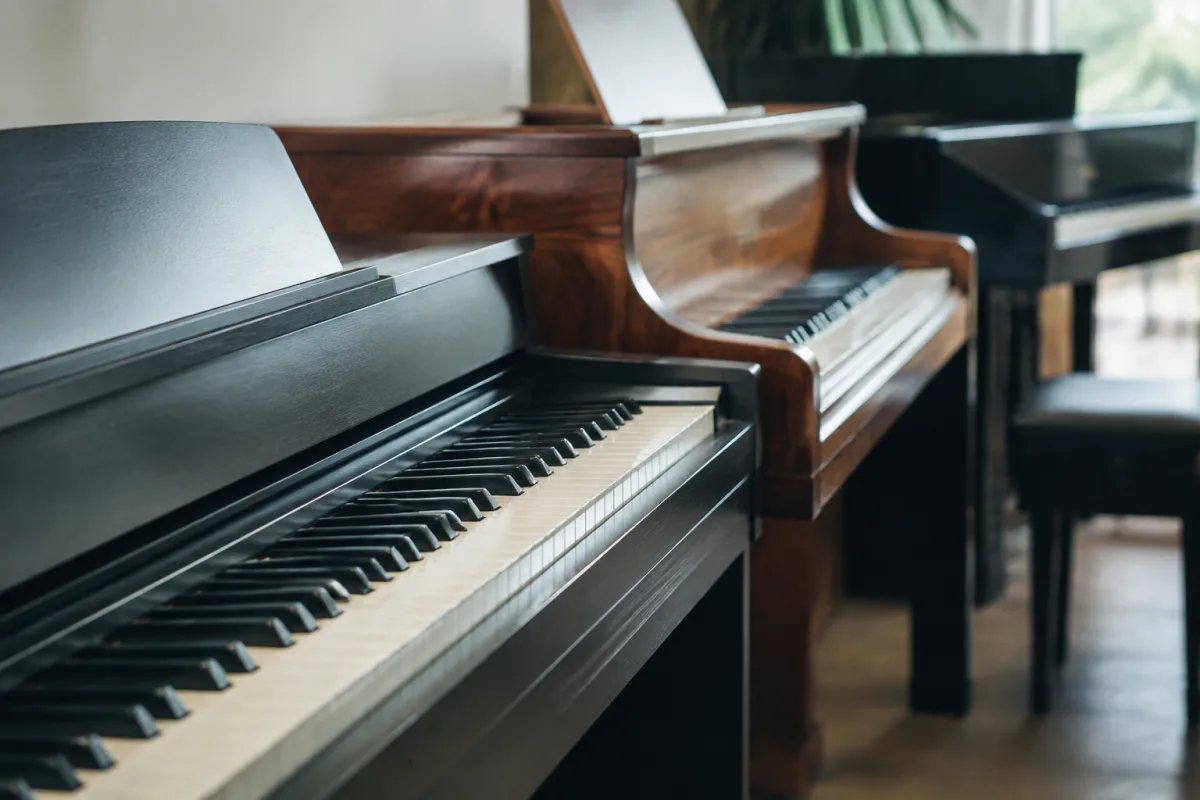
Piano Prices: What to Expect at Every Level
Piano prices vary wildly depending on type, size, materials and maker. A budget keyboard can cost £100, whilst a concert grand from Steinway or Bösendorfer can exceed £150,000. Understanding what factors into pricing helps you make a sensible choice between a beginner upright, a semi-professional digital stage piano or a prestigious concert instrument.
New Piano Price Ranges
Digital Keyboards (£80–600)
Entry-level digital keyboards offer sampling and synthesis in a portable format. Budget models (£80–200) include basic sounds, 61 unweighted keys and minimal connectivity. Mid-range keyboards (£200–600) feature weighted 88-key action simulating acoustic pianos, superior sound engines and MIDI integration. Realistic hammer action and responsiveness improve significantly at the higher end of this range. Ideal for learners, songwriters and bedroom producers.
Stage Pianos (£600–3000)
Purpose-designed stage pianos prioritise keyboard action and professional sound engines over portability. Yamaha P-125, Roland FP-90X and Korg Kross2 are popular choices. Full 88-key weighted action, multiple piano voices, and robust build quality are standard. These appeal to performing musicians, semi-professionals and serious students. Excellent value for the quality and features.
Acoustic Upright Pianos (£3000–12,000)
New upright pianos from established manufacturers (Yamaha U3, Kawai K-300, Steinway K) range from £3000 (basic student upright) to £12,000+ (professional-grade). Size matters: a 121 cm tall spinet is more affordable than a 130+ cm upright with better action and tone. Materials, finish complexity and brand heritage influence price. A quality used upright can offer better value: expect to pay 40–60% of new price for a 10–20 year old well-maintained instrument.
Baby Grand Pianos (£10,000–40,000)
Baby grands (5'–5'6") from Yamaha, Kawai and Steinway range from £10,000 to £40,000+ new. This category includes semi-concert models suitable for serious students, teachers and semi-professionals. Used baby grands are excellent value, especially from Japan (high maintenance culture). A quality used Yamaha C2 or Kawai KB300 often costs £15,000–25,000 and performs like a £30,000+ new instrument.
Concert Grand Pianos (£40,000–200,000+)
Full concert grands (7'–9'+) from Steinway, Bösendorfer and Fazioli command premium pricing due to materials, craftsmanship and prestige. A Steinway Model D (the industry standard) costs £80,000–120,000 new; rare vintage Steinways and Bösendorfers can exceed £150,000. These are professional instruments owned by concert halls, recording studios and elite performers. For most buyers, used concert grands represent better value, though £40,000–80,000 is typical for a well-maintained example.
Factors Affecting Piano Price
| Factor | Impact on Price | Details |
|---|---|---|
| Type (Digital, Upright, Grand) | Most significant — 10x variation possible | Grands are more expensive than uprights; digital cheapest overall |
| Manufacturer | High — Steinway commands 30–50% premium over Yamaha | Premium brands: Steinway, Bösendorfer, Fazioli; value brands: Yamaha, Kawai, Baldwin |
| Size | Moderate — larger instruments cost more | Baby grand vs Concert grand; 121cm vs 130cm upright |
| Action Quality | Moderate — affects playability and price tier | Weighted vs unweighted (digital); Renner vs Yamaha action (acoustic) |
| Materials | Moderate — exotic woods and premium finishes add cost | Spruce soundboards, African mahogany, high-gloss lacquer |
| Age and Condition (Used) | High — maintenance history determines value | Well-maintained 1970s Yamaha worth more than neglected 2000s budget brand |
New vs Used Piano Value
New pianos come with manufacturer warranty, pristine condition and latest technology. However, depreciation is steep: a new £8000 upright may be worth £4500 after five years. Used pianos from reputable sellers often offer superior value. A £5000 used Yamaha U3 from the 1980s, if well-maintained, plays and sounds comparable to a £6000–7000 new mid-range upright. Vintage concert grands (1950s–1980s Steinways and Bösendorfers) often sound superior to newer equivalents and appreciate rather than depreciate.
Budget Considerations for Different Players
Beginner (£500–2000): A quality weighted 88-key digital piano (£800–1500) or used student upright (£1500–2000) is sensible. Budget £200–500 annually for maintenance and tuning once playing seriously.
Intermediate (£3000–8000): A new mid-range upright, a used baby grand or a premium stage piano suits dedicated learners and semi-professionals. Allows real concert experience and resale options.
Professional (£10,000+): New or well-maintained used baby grand or concert grand. Investment pays dividends in performance opportunity, recording value and resale potential.
Hidden Costs Beyond Purchase Price
- Tuning and regulation: £100–300 annually for acoustic pianos
- Moving and installation: £500–2000 depending on accessibility and distance
- Humidification: £100–300 for climate control systems to protect acoustic pianos
- Repairs and restoration: £1000–10,000+ for significant work on older instruments
- Bench and accessories: £100–500 for quality bench, metronome, sheet music stand
Verdict
Piano pricing reflects materials, craftsmanship and prestige. Beginners should not overspend: a quality £1000 digital piano teaches technique as effectively as a £10,000 upright. Semi-professionals benefit from £5000–15,000 investment in a good upright or baby grand. Professionals and serious enthusiasts justify £20,000–100,000+ for concert instruments. Whatever your budget, buy the best quality you can afford rather than cheaper quantity. A well-maintained piano appreciates with use and age; a budget instrument deprecates rapidly. If in doubt, consult a piano technician or teacher before purchasing.



Comments