
Lights and Lasers article
The Complete Guide to Lights And Lasers
Lights and lasers transform performances into immersive experiences. Discover technologies and artistic applications enhancing musical presentations.
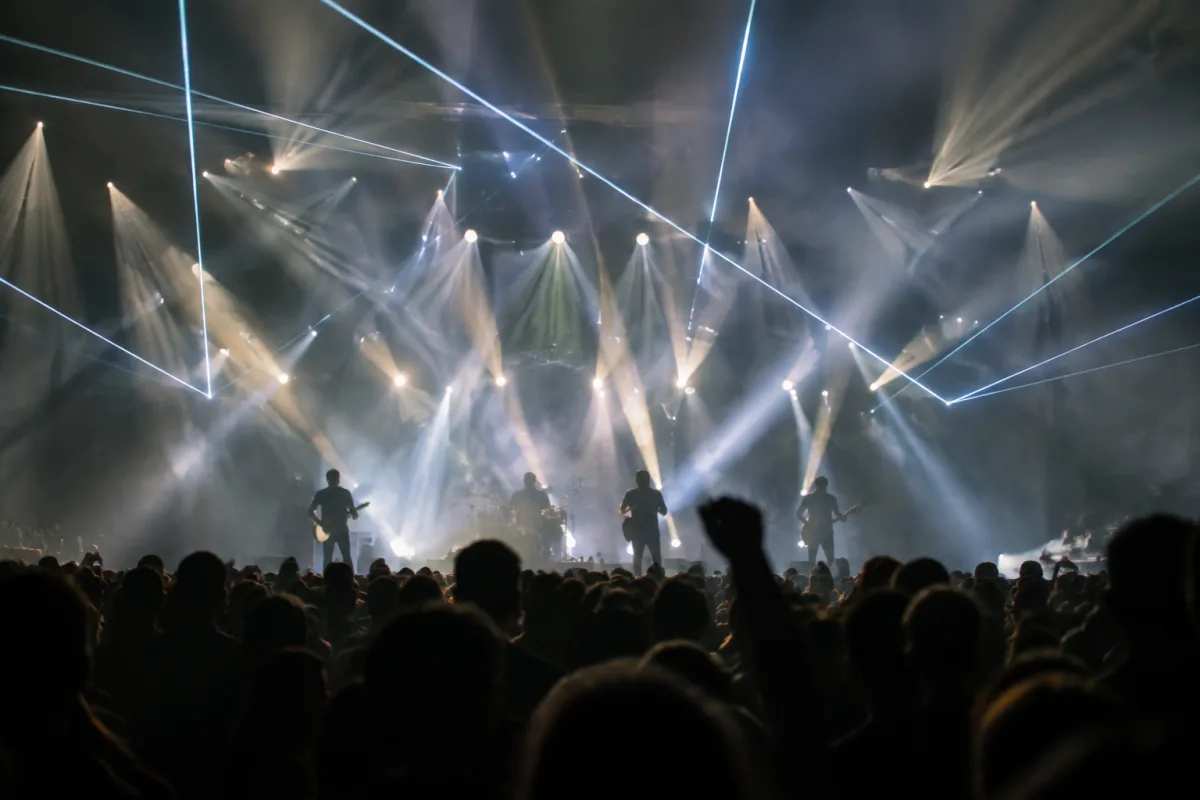
Lights and lasers transform musical performances from simple acoustic events into immersive visual experiences that engage audiences on multiple sensory levels. The relationship between sound and light has evolved from basic stage illumination into sophisticated technological integration where synchronisation between music and visual elements creates unforgettable moments. Understanding how lights and lasers enhance musical performances, the different technologies available, and how to effectively deploy them transforms your artistic vision into reality. This guide explores the fascinating intersection of music and visual spectacle, examining technologies, practical applications, and creative approaches to lights and lasers in modern music performances.
The Role of Lights and Lasers in Modern Performance
Historically, stage lighting served purely functional purposes — illuminating performers for audience visibility. Contemporary approaches recognise lights and lasers as artistic partners to music itself. Synchronised visual effects create emotional resonance beyond what sound alone achieves. A crescendo amplified by sudden illumination intensity, a dramatic silence punctuated by laser geometry, or sustained atmospheric texture built through subtle lighting shifts — these visual-musical partnerships elevate performances into complete sensory experiences.
Lights and lasers serve multiple simultaneous functions in modern performances. They establish spatial context, guide audience attention, reinforce musical emotional content, generate visual rhythm mirroring sonic patterns, and create production value justifying ticket prices. Effective deployment requires understanding both technical capabilities and artistic intention — the best lights and lasers enhance performances through purposeful application rather than continuous bombardment.
Different musical genres employ lights and lasers distinctly. Electronic dance music typically features intense, rapid-fire visual stimulation with lights and lasers responding to beat frequencies. Rock performances often use lights and lasers to punctuate moments and create atmosphere around focal points. Jazz and acoustic performances might employ subtle, sophisticated lighting that enhances without dominating. Classical performances occasionally incorporate lights and lasers, though traditionalists sometimes resist visual enhancement of purely acoustic music.
Lighting Technology Fundamentals
Modern stage lighting employs several technologies, each with specific characteristics and applications. LED (light-emitting diode) technology dominates contemporary productions, offering efficiency, reliability, and colour flexibility impossible with older incandescent or traditional stage fixtures. LEDs generate less heat, require less power, and last considerably longer than predecessor technologies. This reliability has made lights and lasers accessible to mid-level productions previously requiring major budgets.
Moving head fixtures represent the sophistication of contemporary stage lights and lasers. These automated instruments pan, tilt, change colour, adjust focus, and perform complex movements, all controllable from centralised control systems. A single operator manages dozens of individual moving heads, creating complex visual effects through coordinated automation. This capability transforms lights and lasers from static installations into dynamic, responsive artistic tools.
Colour mixing in modern lighting occurs through RGB (red-green-blue) mixing in LED fixtures, allowing precise colour control and smooth colour transitions. Older incandescent fixtures required physical gel changes and provided less colour flexibility. Contemporary lights and lasers offer palette possibilities limited primarily by operator creativity rather than hardware constraints.
Laser Technology in Performance
Laser technology represents performance lighting's most dramatic visual frontier. Coherent light beams create geometric patterns, penetrate smoke and haze in ways standard lighting cannot achieve, and generate visual intensity and precision unmatched by conventional fixtures. Lights and lasers used in conjunction create dimensional effects impossible either technology achieves independently.
Full-colour laser systems employ separate red, green, and blue laser modules, mixing beams to create full-spectrum colour lasers. These sophisticated systems cost substantially more than standard lighting but deliver unprecedented visual impact. Beam geometry precision allows creation of intricate patterns, sharp text projection, and visual effects simply impossible with conventional lighting.
Laser safety represents critical consideration in lights and lasers deployment. Laser beams can damage human eyesight if audiences are exposed to direct or reflected laser light. Professional laser operators understand safety protocols, maintain appropriate beam angles, implement audience protection measures, and comply with strict regulatory requirements. Casual laser use creates serious legal liability and physical danger — only properly trained operators should deploy lights and lasers systems incorporating lasers.
Synchronisation and Control Systems
Effective lights and lasers performances require precise synchronisation between audio and visual elements. Modern control systems employ MIDI (Musical Instrument Digital Interface) connectivity allowing lighting consoles to receive triggers from audio equipment, sequencers, or live mixing systems. This integration enables lights and lasers effects responding to actual musical content rather than following predetermined cues.
Some sophisticated systems employ audio analysis algorithms where the lighting system monitors the audio mix in real-time, extracting frequency content and dynamically responding with appropriate visual effects. This automation transforms lights and lasers from static pre-programmed sequences into genuinely responsive visual accompaniment.
Manual control remains essential in live performances where unpredictable elements require operator adaptation. Expert lighting operators working with lights and lasers systems develop similar real-time responsiveness as musicians themselves, adjusting visual effects intuitively based on performance energy and audience response.
Practical Applications Across Venues
Large venue productions (festivals, arena tours, major venues) employ sophisticated lights and lasers systems with comprehensive technical support, environmental conditioning, and advanced automation. These large-scale deployments create visually stunning experiences but require major infrastructure investment.
Mid-sized venues (concert halls, nightclubs, theatres) often employ more modest lights and lasers systems balancing visual impact with practical constraints. These deployments demonstrate that effective lights and lasers enhance performances without requiring arena-scale budgets. Clever design choices and thoughtful deployment often outperform expensive systems deployed carelessly.
Smaller venues and touring productions employ lights and lasers systems ranging from simple intelligent lighting fixtures to modest laser effects. Modern technology has made sophisticated visual design accessible to smaller productions previously limited to basic stage lighting. This democratisation of lights and lasers technology expands creative possibilities across the performance spectrum.
Artistic Deployment Strategies for Lights and Lasers
Effective lights and lasers deployment requires understanding negative space — the importance of darkness and subtlety alongside visual intensity. Continuous bombardment of lights and lasers fatigues audiences. Strategic deployment where visual elements punctuate musical moments creates greater impact than constant effects.
Colour psychology influences audience emotional response. Warm colours (reds, oranges, yellows) generally evoke energy and passion. Cool colours (blues, greens, purples) suggest contemplation and mystery. Sophisticated lights and lasers design employs colour strategically to reinforce emotional content.
Texture and atmosphere created through haze or fog fundamentally alters lights and lasers visibility. Laser beams become dramatic visible shafts only when haze particles scatter light. Standard lighting becomes three-dimensional rather than flat. Professional productions carefully balance haze density — too little provides limited visual benefit; too much obscures sightlines.
Conclusion
Lights and lasers have evolved from basic stage illumination into essential artistic tools elevating musical performances into complete sensory experiences. Understanding available technologies, synchronisation capabilities, and creative deployment strategies empowers performers and production teams to translate musical vision into visual reality. Whether producing intimate venue performances or large-scale productions, thoughtful lights and lasers integration creates memorable experiences that resonate long after performances conclude. From solo musician employing subtle intelligent fixtures through arena productions utilising sophisticated laser arrays, lights and lasers represent contemporary performance's most visceral element — transforming sound into sight and creating moments where visual and sonic art merge into unified artistic statement.


Comments