
Analogue Synths article
The Complete Guide to Analogue Synths
Analogue synthesisers generate sound through voltage-controlled electronics, offering distinctive warmth and hands-on control unmatched by digital alternatives.
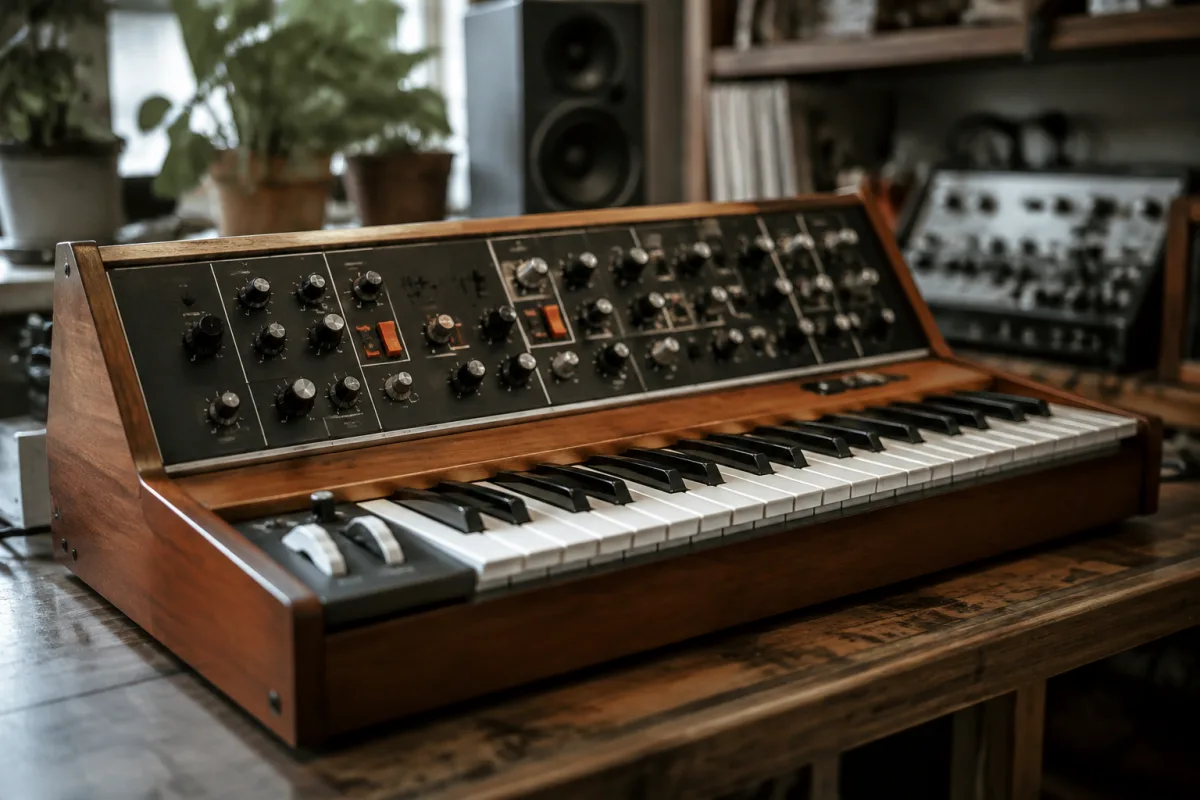
Analogue synthesisers generate sound through voltage-controlled oscillators and other electronic components, creating tones that reflect the physical behaviour of electrical circuits. These instruments shaped electronic music from its inception, remaining cherished by contemporary musicians for their distinctive warmth, oscillation instability, and tactile control interfaces. Whether you seek classic Moog character, Minimoog portability, or Buchla patch-bay flexibility, analogue instruments deliver hands-on creativity impossible with purely digital alternatives.
How Analogue Synthesis Works
Analogue synthesis relies on control voltage (CV) principles, where small electrical voltages directly control oscillator pitch, filter cutoff, and other parameters. A keyboard sends changing voltages corresponding to played notes; these voltages traverse through filter modules, envelope generators, and other processors. The resulting signal reaches amplifiers and ultimately speakers.
This voltage-based architecture creates natural harmonic relationships and organic parameter interaction lacking in digital systems. When oscillators drift slightly out of tune—a characteristic of older electronic instruments—the resulting interference patterns generate warmth and movement valued by many contemporary artists and producers.
Core Components & Modules
Synthesisers combine several essential modules, each contributing specific tonal characteristics:
- Oscillators – Generate base waveforms (sawtooth, square, triangle, sine), the raw material oscillators craft into complex tones.
- Filters – Shape oscillator output by removing frequencies, typically using voltage-controlled designs (VCF) allowing dynamic tonal evolution.
- Envelope Generators – Control how sound intensity changes over time, defining attack, decay, sustain, and release characteristics (ADSR).
- Amplifiers – Control overall volume, working in concert with envelope generators to create dynamic shaping.
- Modulation Sources – LFOs (low-frequency oscillators) and other modulation sources apply rhythmic and expressive variations to pitch, tone, or volume.
- Sequencers – Some instruments include built-in or connectable sequencers, enabling repeatablemelodic patterns and rhythmic sequences.
Iconic Analogue Synthesiser Designs
The Minimoog represents portable analogue synthesis perfection, delivering three oscillators, filter, envelope generator, and keyboard in a single compact unit. Moog modular systems offer ultimate flexibility, allowing custom signal-routing through patch cables connecting various modules. ARP instruments introduced alternatives like the Odyssey and Prophet series. Buchla systems pioneered touch-sensitive control and complex modulation routing. Roland’s Juno and TR series brought affordability and portability to analogue synthesis.
Each design embodies different philosophies: some prioritise simplicity and immediacy, whilst others emphasise complexity and sound design depth.
The Warmth Characteristic & Technological Quirks
Many players attribute distinctive warmth to analogue instruments’ natural component tolerances and slight oscillator drift. Rather than flaws, these characteristics become tonal assets—the gentle pitch variation creates stereo width and organic movement. High-quality vacuum tube designs exhibit subtle harmonic compression as signals approach component saturation limits, contributing subjective sense of "glue" and cohesion lacking in more precise digital counterparts.
Analogue filter designs respond differently to input level changes than digital emulations, offering musical nonlinearity valued in professional production contexts.
Monophonic vs. Polyphonic Models
Classic analogue instruments like the Minimoog remain monophonic, playing one note at a time but offering immediate hands-on parameter control. Polyphonic variants arrive later, allocating oscillators and filters across multiple voices enabling chord performance. Each approach suits different musical contexts; monophonic instruments encourage sequential playing styles and emphasise expression, whilst polyphonic models enable harmonic complexity at the cost of some hands-on immediacy.
Integration with Modern Production
Contemporary musicians combine analogue and digital technologies, routing keyboard output into computer-based production environments. Analogue outputs feed audio interfaces; MIDI keyboard controllers trigger sound engines whilst analogue hardware processes output through filters and amplifiers. This hybrid approach leverages analogue character for tonal shaping whilst maintaining digital production flexibility.
Manufacturers continue producing new analogue designs, recognising enduring demand for hands-on interfaces and distinctive sonic character impossible to achieve through purely digital means.
Learning & Sound Design Approach
Understanding analogue synthesis requires grasping fundamental concepts: how oscillators generate pitch, how filters shape frequency content, how envelopes control dynamic evolution. Once these principles solidify, sound design becomes intuitive experimentation—patch cables connect modules, hands twist knobs, ears respond to tonal changes. This immediacy proves both educational and musical, encouraging experimentation and discovery.
Many producers credit analogue synthesis study with improving their overall production understanding, developing deeper intuition about how sound behaves electrically.
Why Analogue Remains Vital
Despite decades of digital synthesis advancement, analogue instruments retain irreplaceable appeal for their hands-on interface, unpredictable character, and distinctive sonic signature. Modern manufacturers offer new analogue designs at various price points, proving market demand for these instruments remains robust. Whether you embrace vintage Moogs, newer Moog products, or boutique manufacturers, you gain access to synthesis philosophy centring on immediate control and organic sonic character.
The appeal transcends technology; it reflects fundamental human desire to touch instruments, feel sound shape under your hands, and discover unique voices impossible through predetermined digital pathways.



Comments